


Obama center opens to public on Juneteenth
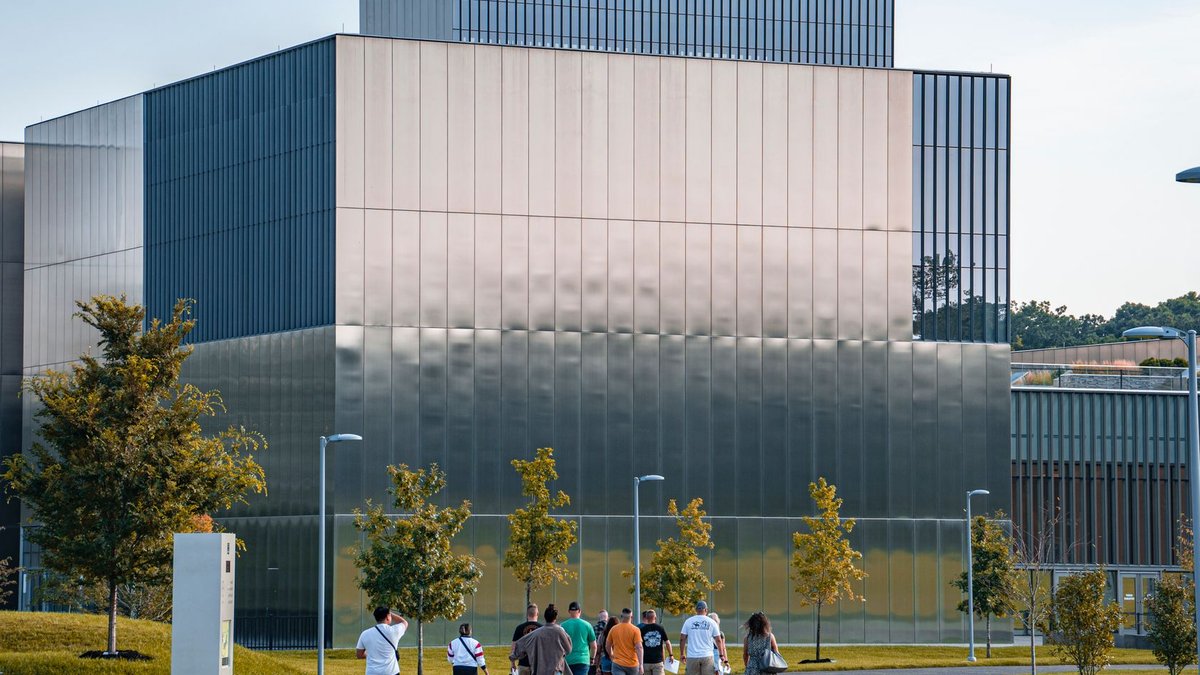
People across the U.S. are marking Juneteenth this year, and on the same day, the Obama Presidential Center on Chicago’s South Side is opening its doors to the general public for the first time. The campus honors the nation’s first Black president and is designed, according to its planners, to push visitors toward making change in their own communities. It’s a moment where a presidential legacy and a holiday celebrating the end of slavery in the U.S. line up on the same calendar.
The holiday marks June 19, 1865, the day Union troops arrived in Galveston, Texas, with an order declaring enslaved people in the state free with “absolute equality.” “Juneteenth represents not just a commemoration of the end of slavery but it’s also part of the ongoing struggle for absolute equality and that ideal in American life,” said W. Caleb McDaniel, a Rice University professor who wrote the Pulitzer Prize-winning book “Sweet Taste of Liberty.”
The center’s public opening arrives as a symbolic convergence of legacy and liberation. The nation is deeply divided politically and grappling with renewed questions about the arc of racial progress
Related: Safeguarding Digital Assets: Why Video DRM Protection Is Your Content’s Best Defense
That dual purpose — community and solitude — is built into the layout.
This is the fifth year since it became a federal holiday, signed into law by former President Joe Biden, who served as Obama’s vice president. But the holiday has a much longer history in Black America, with the day often spent at picnics and cookouts. The name is a combination of “June” and “nineteenth.”
President Abraham Lincoln issued the Emancipation Proclamation during the Civil War, declaring freedom for enslaved people in the rebellious states of the Confederacy. But that didn’t mean immediate freedom. It required Union armies to enforce it. “It really required the force of arms and the success of U.S. armies to enforce the Emancipation Proclamation,” McDaniel said.
Related: Crypto Auto Trading: Automated Investing on Crypto Market
About six months after Granger’s arrival in Galveston, the 13th Amendment abolishing slavery nationwide was ratified.
Celebrations this year are happening across the country. Galveston is hosting a daylong gathering with music and fireworks, a parade, and a worship service in a historic Black church. Houston has musical acts and a domino tournament at Emancipation Park, which was established in 1872 by a group of formerly enslaved men. Hundreds of other cities have events planned, including a parade in Atlanta, a bike ride in Los Angeles, and a festival on Martha’s Vineyard.
Several cities are hosting walks named for Opal Lee, the Texas woman who pushed for years to make Juneteenth a federal holiday. Participants walk to symbolize the time it took for the Emancipation Proclamation to be enforced in Texas. Lee, known as the “grandmother of Juneteenth,” turns 100 this year.
Related: Matt Davies Stockton Looks at Social Media Marketing Mistakes to Avoid
Black Texans adopted the date of Granger’s arrival as one to celebrate, even as the Ku Klux Klan was established in Texas by 1868. By the 1880s, McDaniel said, it was hard to find a significant community in Texas where the day wasn’t being marked by African Americans. “They made it a community celebration, they made it a celebration of not only freedom but also a demonstration of community empowerment and institution-building,” he added.
Corey D.B. Walker, dean of Wake Forest University’s divinity school, said the holiday offers a way to recognize the nation’s “complex history” and what it means to be a U.S. citizen, especially as the Trump administration has worked to undermine the retelling of African American history. “I think it really reminds people the importance of understanding a fuller, more robust portrait of our nation’s history and the many contributions of many individuals who have contributed to America’s experiment with democracy,” Walker said.


